
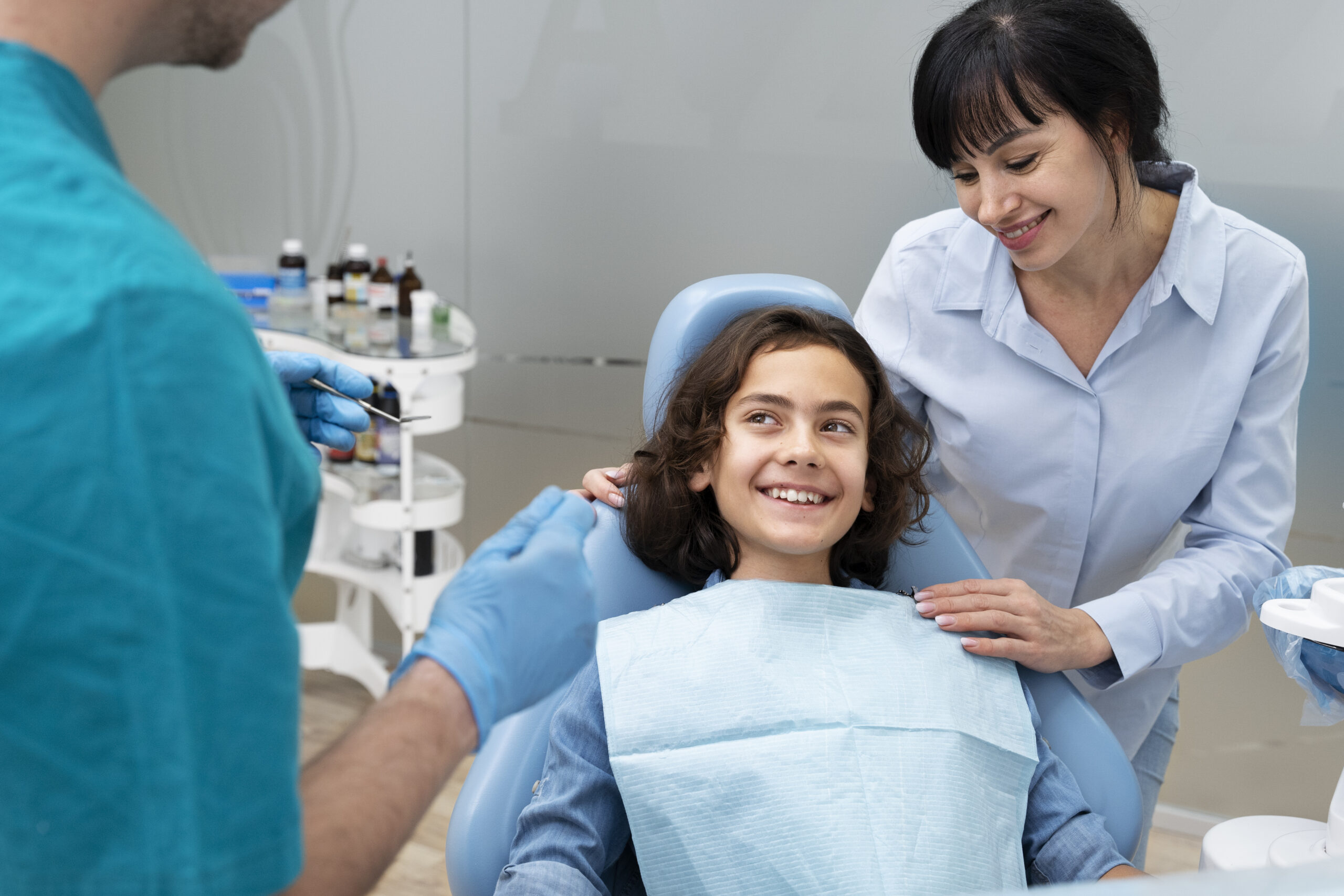
If you are considering orthodontic treatment, you are likely asking a very common question: Is Invisalign in Manotick better than traditional braces? The answer, however, is not the same for everyone. Both Invisalign and traditional braces are proven orthodontic tools designed to straighten teeth, improve bite alignment, and support long-term oral health. Understanding how each option works can help you make a confident, informed decision.
What Is Invisalign?
Invisalign is an orthodontic treatment that uses a series of custom-made, clear aligners created to gradually move teeth into better positions. Each aligner is designed using digital scans and treatment planning software that maps out tooth movement step by step.
Patients wear each set of aligners for 20-22 hours a day before progressing to the next. The aligners are removable, allowing you to eat, brush, and floss without brackets or wires in the way. Because the aligners are clear, many people appreciate that Invisalign is far less noticeable.
Invisalign is commonly used to treat mild to moderate crowding, spacing, and certain bite concerns. However, not every orthodontic issue can be corrected with clear aligners alone.
Invisalign vs Traditional Braces – Key Differences
When comparing Invisalign and braces, it helps to look beyond appearance alone.
Appearance and Lifestyle
Invisalign aligners are clear and discreet, which can appeal to many adults and teens. Braces are visible, but they do not require daily removal or storage.
Flexibility
Both options can cause temporary soreness as teeth move. Invisalign aligners are smooth and may reduce irritation to cheeks and lips, while braces can sometimes cause rubbing until patients adjust.
Oral Hygiene
Removable aligners can make brushing and flossing easier. Braces require more time and tools to clean effectively around brackets and wires.
Diet
Invisalign allows you to eat normally when aligners are removed. Braces require avoiding hard or sticky foods that could damage brackets.
Treatment Oversight
Both treatments require regular dental visits. Invisalign could involve fewer in-office adjustments, while braces require periodic tightening.
Outcomes depend far more on diagnosis and treatment planning than on which appliance is chosen.
Benefits of Invisalign for the Right Candidate
For patients who are good candidates, Invisalign in Manotick offers several practical advantages:
- Clear aligners are designed to blend into everyday life
- Removable design for meals, events, and oral hygiene
- Digital treatment planning created for predictable progression
- Fewer unexpected repairs compared to broken brackets
When Traditional Braces May Be Recommended
Invisalign is not ideal for every orthodontic case. Traditional braces may be recommended if:
- Tooth movement needs are complex or extensive
- Bite correction requires precise control
- Consistent aligner wear may be challenging
- Jaw alignment issues are present
Choosing braces in these situations can help ensure healthy, stable long-term results.
What Our Patients Are Saying About Us in Manotick
“The doctor has done previous work on my teeth, and it was excellent. Highly recommend this dentist, you will not be disappointed.”- Melissa S.
“The office was very clean, and I was greeted with a smile. The appointment went smoothly, and I was made very comfortable. The appointment took a bit longer than I am used to, but I think it was just because of their level of attention to detail. Very happy with my experience.” – Katherine H.
“Went from absolute fear to being so thankful for the care received. Absolutely the best people to work with. Thank you. And I have a great smile again.” – Chris K.
About The Practice
Evergreen Dental Care is proud to serve local families with friendly, customized dentistry focused on long-term oral health. Meet our caring team via the Meet Our Doctors page.
Curious about how Invisalign can help your smile?
Call Evergreen Dental Care today to book your customized consultation and find out which path fits your smile.
FAQs
Are Invisalign braces in Manotick better than braces for adults?
Invisalign is designed to be an effective option for many adults and teenagers, particularly those with mild to moderate alignment concerns who value flexibility and a discreet appearance. However, Invisalign is not automatically better than braces. Some adult orthodontic concerns, especially bite-related issues, may respond more predictably to traditional braces.
How long does Invisalign treatment usually take?
Invisalign treatment length varies based on the complexity of tooth movement, bite correction needs, and how consistently aligners are worn. Many patients complete treatment within a general range, but timelines can be shorter or longer depending on individual factors. Wearing aligners as directed plays a major role in staying on schedule. Book your consultation with us to get started via the Contact page.
Does Invisalign hurt more than braces?
Both Invisalign and braces can cause mild discomfort as teeth shift into new positions. Invisalign aligners apply controlled pressure, which many patients find manageable and short-lived. Braces can also cause soreness, particularly after adjustments. Neither option should cause ongoing pain. Any discomfort usually fades within a few days. If soreness persists, contact our dental team for support at 613-695-2663.
Is Invisalign more expensive than traditional braces?
The overall cost of Invisalign and braces is often comparable and depends on factors such as treatment complexity, treatment duration, and customization needs. Some cases require more aligners or longer monitoring, while others are more straightforward. Insurance coverage and payment options can also influence out-of-pocket expenses. Check out our New Patients page for more financial details.
Can teenagers get Invisalign aligners?
Yes, many teenagers are ideal candidates for Invisalign, particularly those with mild to moderate alignment concerns and the ability to wear aligners consistently. Invisalign Teen is designed with features that support growing smiles and treatment tracking. However, not every teen is suited for removable aligners. Traditional braces may be recommended when compliance or complex tooth movement is a concern.